

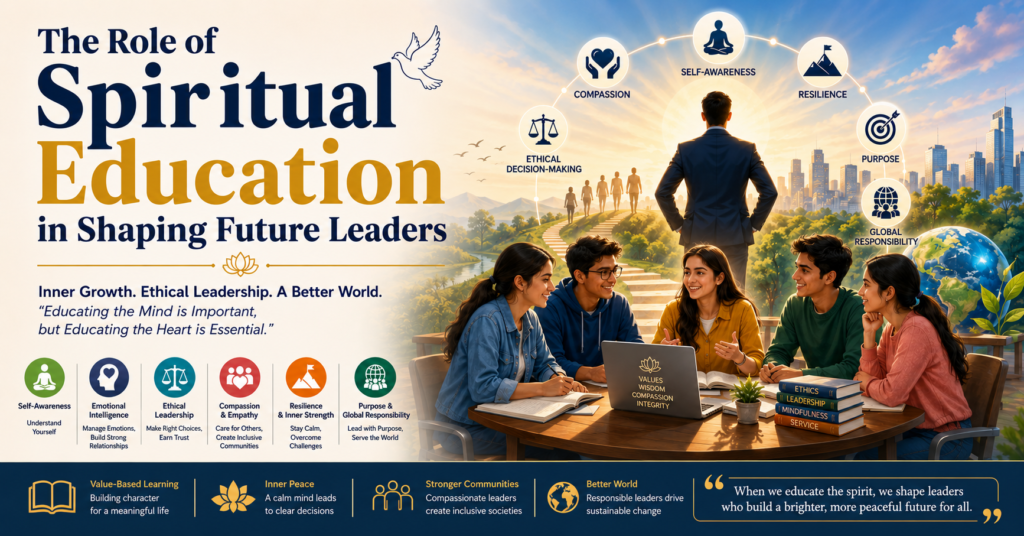
Introduction
The world today is changing very fast. Technology, artificial intelligence, and globalization have created many opportunities, but they have also brought new challenges. Future leaders will not only need intelligence and professional skills but also strong moral values, compassion, and wisdom. This is where spiritual education becomes important.
Spiritual education is not limited to any particular religion. It teaches universal values such as honesty, kindness, self-discipline, respect, responsibility, gratitude, and inner peace. It helps individuals understand themselves better and develop a deeper connection with humanity. By nurturing these qualities, spiritual education plays a vital role in shaping responsible and ethical future leaders.
What is Spiritual Education?
Spiritual education is the process of developing inner awareness, moral character, and positive values. It encourages people to explore the meaning and purpose of life while promoting peace, empathy, and self-control.
Unlike traditional education, which mainly focuses on academic knowledge and career development, spiritual education focuses on personal growth and character building. It teaches individuals how to manage emotions, make ethical decisions, and contribute positively to society.
Spiritual education may include practices such as meditation, mindfulness, self-reflection, prayer, gratitude, community service, and learning about universal human values.
Why Future Leaders Need Spiritual Education
Leadership is more than managing people or achieving business goals. A true leader influences others, makes important decisions, and creates a positive impact on society. Without strong values, leadership can become selfish and harmful.
Many global problems today, including corruption, discrimination, violence, and environmental destruction, are often linked to a lack of ethical leadership. Spiritual education helps future leaders develop a strong moral foundation that guides their actions and decisions.
When leaders possess spiritual wisdom, they are more likely to act with integrity, fairness, and compassion. They focus not only on personal success but also on the well-being of others.
Developing Self-Awareness and Emotional Intelligence
One of the most important benefits of spiritual education is self-awareness. Leaders who understand their strengths, weaknesses, emotions, and motivations can make better decisions.
Spiritual practices such as meditation and reflection help individuals become more aware of their thoughts and feelings. This awareness improves emotional intelligence, which is essential for effective leadership.
Emotionally intelligent leaders can remain calm during difficult situations, manage stress effectively, and communicate with empathy. They are better equipped to resolve conflicts and build strong relationships with their teams.
Promoting Ethical Decision-Making
Future leaders often face complex situations where they must make difficult choices. Academic knowledge alone may not always provide the right answers.
Spiritual education teaches values such as honesty, justice, responsibility, and respect for others. These principles help leaders make ethical decisions even when facing pressure or temptation.
A leader with strong spiritual values considers the long-term consequences of actions rather than focusing only on short-term gains. Such leaders earn trust and respect from employees, customers, and society.
Encouraging Compassion and Empathy
Great leaders understand the needs and feelings of others. Spiritual education promotes compassion and empathy by encouraging individuals to see the world from different perspectives.
Empathetic leaders create inclusive workplaces where people feel valued and respected. They listen carefully, support their team members, and treat everyone fairly.
Compassionate leadership is especially important in today’s diverse and interconnected world. Leaders who care about people can build stronger communities and organizations while reducing conflict and misunderstanding.
Building Resilience and Inner Strength
Leadership often comes with challenges, criticism, and uncertainty. Future leaders need resilience to overcome difficulties and continue moving forward.
Spiritual education helps individuals develop inner strength and mental stability. Practices such as mindfulness and meditation teach people how to remain focused and positive during stressful situations.
Leaders with strong inner resilience are less likely to be overwhelmed by failures or setbacks. Instead, they view challenges as opportunities for growth and learning.
Inspiring a Sense of Purpose
Many successful people achieve wealth and fame but still feel dissatisfied because they lack a deeper sense of purpose. Spiritual education encourages individuals to discover meaningful goals beyond personal achievements.
Purpose-driven leaders focus on creating value for society. They work not only for profits but also for social progress, environmental protection, and human well-being.
When leaders are guided by a higher purpose, they inspire others to contribute positively and work toward common goals.
Creating Responsible Global Citizens
Today’s leaders must address global challenges such as climate change, poverty, inequality, and social conflict. Spiritual education teaches interconnectedness and responsibility toward all living beings.
It helps future leaders understand that their actions affect not only themselves but also communities, nations, and future generations. This broader perspective encourages sustainable and responsible leadership.
Leaders with spiritual awareness are more likely to support ethical business practices, social justice, and environmental conservation.
Integrating Spiritual Education into Modern Learning
Schools, colleges, and universities can play an important role in promoting spiritual education. This does not require religious instruction but rather value-based learning.
Educational institutions can include activities such as:
- Meditation and mindfulness sessions
- Character development programs
- Community service projects
- Lessons on ethics and moral values
- Gratitude and self-reflection exercises
- Conflict resolution and emotional intelligence training
These activities help students develop both intellectual and spiritual strengths, preparing them for future leadership roles.
Conclusion
The future of society depends greatly on the quality of its leaders. While knowledge, technology, and professional skills are important, they are not enough to create truly effective leadership. Future leaders must also possess integrity, compassion, wisdom, and a strong sense of responsibility.
Spiritual education helps develop these essential qualities by nurturing self-awareness, ethical thinking, emotional intelligence, resilience, and purpose. It transforms individuals into leaders who care not only about success but also about the well-being of humanity.
As the world faces increasing social and moral challenges, spiritual education can serve as a guiding light for the next generation. By investing in the spiritual growth of young people today, we can create future leaders who inspire peace, unity, justice, and positive change for the world.
Vishwa Dharma Samvad is a spiritual platform that works to spread peace, positivity, and human unity through the teachings of Sanatan Dharma. It encourages people to live with kindness, respect, and spiritual values. Through spiritual discussions, cultural activities, and awareness programs, Vishwa Dharma Samvad aims to create harmony in society and inspire a better and more peaceful world.