

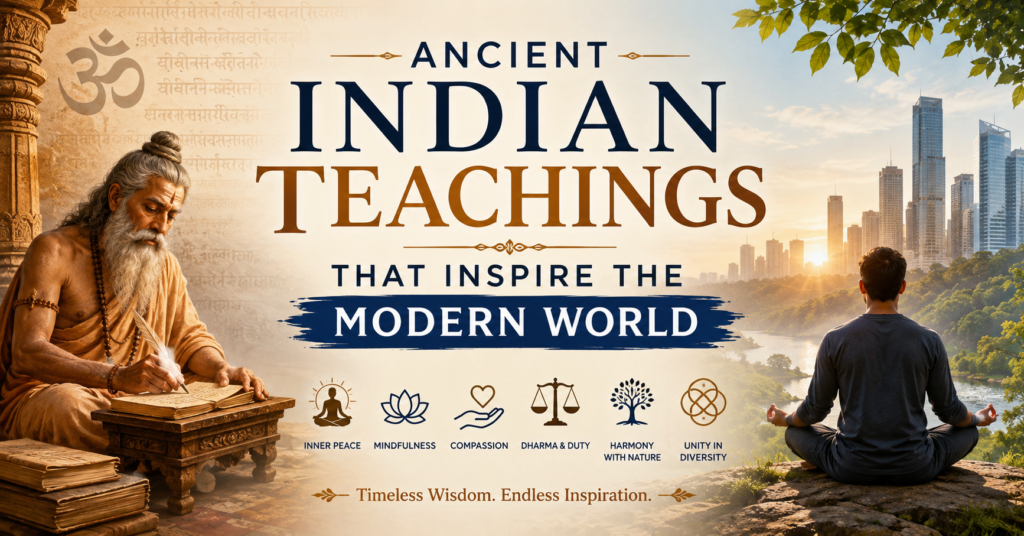
Ancient Indian Teachings That Inspire the Modern World
The modern world is moving faster than ever before. People are busy with work, technology, social media, and daily responsibilities. While these developments have made life easier in many ways, they have also increased stress, anxiety, and loneliness. In the search for peace and purpose, many people are turning towards ancient wisdom for guidance.
India has one of the oldest spiritual traditions in the world. For thousands of years, its sages, saints, and philosophers have shared teachings that focus on inner peace, compassion, self-awareness, and harmony with nature. These teachings are not limited to one religion or culture. They offer universal values that can inspire people from every background.
Let us explore some of the most powerful ancient Indian teachings that continue to guide and inspire the modern world.
1. The Power of Self-Knowledge
One of the most important teachings in Indian philosophy is “Know Yourself.” Ancient texts like the Upanishads encourage people to look within and understand their true nature.
Today, many people spend their lives chasing success, money, and recognition. While these goals are important, they do not always bring lasting happiness. Self-knowledge helps people understand their strengths, weaknesses, values, and purpose.
When we know ourselves better, we make wiser decisions, build healthier relationships, and experience greater confidence. Personal growth begins with self-awareness.
2. Karma: Every Action Has Consequences
The principle of karma teaches that every action creates a result. Good actions bring positive outcomes, while harmful actions create negative effects. Karma is not simply about reward or punishment—it reminds us that our choices shape our future.
In today’s world, this teaching encourages responsibility. Whether we are interacting with family, colleagues, or strangers online, our words and actions matter.
Living with honesty, kindness, and integrity creates a better environment for everyone.
3. Yoga: A Path to Balance
Many people know yoga as a physical exercise, but its original purpose goes much deeper. Ancient Indian teachings describe yoga as a way to unite the body, mind, and spirit.
Practising yoga regularly improves flexibility and strength, but it also helps reduce stress, improve focus, and support emotional well-being.
Even spending a few minutes each day stretching, breathing deeply, or sitting quietly can make a noticeable difference in our busy lives.
4. Meditation for Inner Peace
Meditation has been practised in India for thousands of years. It teaches us to calm the mind instead of allowing endless thoughts to control us.
Modern research has shown that meditation can help reduce stress, improve concentration, support better sleep, and increase emotional balance.
In today’s fast-paced world, taking just ten minutes each day to sit quietly and observe your breath can become a powerful habit for mental well-being.
5. Ahimsa: The Practice of Non-Violence
Ahimsa means non-violence in thought, word, and action. It is one of the central values found in Indian traditions.
While most people think of non-violence as avoiding physical harm, Ahimsa also encourages kindness, patience, forgiveness, and respect.
In modern life, practising Ahimsa may mean speaking gently, avoiding unnecessary arguments, showing compassion to others, and caring for animals and nature.
Small acts of kindness can create a big positive impact.
6. Living in Harmony with Nature
Ancient Indian culture has always respected nature. Rivers, mountains, forests, trees, and animals were treated with gratitude and reverence because they support all life.
Today, climate change and environmental challenges remind us how important this teaching truly is.
Simple actions like reducing waste, planting trees, saving water, and protecting wildlife reflect this ancient wisdom. Caring for nature also means caring for future generations.
7. The Importance of Dharma
Dharma is often described as living according to truth, duty, and righteousness. It encourages people to perform their responsibilities honestly while contributing positively to society.
Whether someone is a teacher, doctor, student, business owner, or parent, Dharma reminds them to fulfil their role with sincerity and fairness.
Modern workplaces also benefit when people work with honesty, respect, and responsibility.
8. Detachment from Excessive Desire
Ancient Indian teachings do not ask people to give up success or happiness. Instead, they teach that attachment to endless desires often leads to disappointment and stress.
The Bhagavad Gita encourages people to perform their duties with dedication while remaining calm about the results.
This mindset helps reduce anxiety because we focus on doing our best instead of worrying about things beyond our control.
9. The Value of Compassion and Service
Serving others has always been considered a noble path in Indian spiritual traditions. Helping those in need, supporting the community, and showing generosity create both personal happiness and social harmony.
In modern society, service does not always require money. It can be as simple as offering encouragement, volunteering, sharing knowledge, or listening to someone who needs support.
Compassion strengthens families, communities, and workplaces.
10. Unity in Diversity
India is home to many languages, cultures, traditions, and spiritual paths. Yet one of its deepest teachings is that truth can be understood through different perspectives.
This message is especially meaningful today, when people from different backgrounds work and live together around the world.
Respecting diversity while recognising our shared humanity creates stronger relationships and more peaceful societies.
Applying Ancient Wisdom in Everyday Life
These timeless teachings are practical and easy to include in daily routines. You can begin by:
- Spending a few minutes in meditation every morning.
- Practising gratitude for what you already have.
- Speaking kindly to others, even during disagreements.
- Taking responsibility for your actions.
- Caring for the environment through simple daily habits.
- Helping someone without expecting anything in return.
- Balancing work with rest and self-care.
- Focusing on personal growth instead of comparing yourself with others.
Small, consistent actions often create lasting change.
Conclusion
Ancient Indian teachings continue to inspire millions of people because they focus on values that never become outdated. Self-awareness, compassion, honesty, balance, service, and respect for nature remain just as meaningful today as they were thousands of years ago.
As the modern world becomes increasingly busy and connected, these timeless principles remind us that true happiness begins within. By applying even a few of these teachings in everyday life, we can build healthier minds, stronger relationships, and more peaceful communities.
The wisdom of ancient India is not only part of history—it is a guide for creating a more balanced and meaningful future for people everywhere.
Vishwa Dharma Samvad is a spiritual platform that works to spread peace, positivity, and human unity through the teachings of Sanatan Dharma. It encourages people to live with kindness, respect, and spiritual values. Through spiritual discussions, cultural activities, and awareness programs, Vishwa Dharma Samvad aims to create harmony in society and inspire a better and more peaceful world.